AE-GAN version 1
Changes from previous model (test model from last week)
New loss function
- Want GAN loss to increase as AE loss decreases.
- Do this by scaling the GAN loss by 1 / AE loss.
- Need 0.0005 scalar multiplier in order to keep GAN loss the same order of magnitude as AE loss.
def loss_wapper(g_model, alpha, beta):
    mse = MeanSquaredError()
    bce = BinaryCrossentropy()

    def loss(x, y_true, y_pred):
        # run data through generator
        y = g_model(x)
        # calculate typical loss functions
        ae = mse(x, y)
        gan = bce(y_true, y_pred)

        # scale ae loss and invert
        ae_loss = tf.math.scalar_mul(alpha, ae)
        ae_loss_inverted = 1 / ae_loss

        # gan_loss should = gan_loss * 0.0005 * (1/ae_loss) Hopefully that will allow recovery from convergence f ailure
        gan_loss_scaled = tf.math.scalar_mul(beta, gan)
        gan_loss = tf.math.multiply(gan_loss_scaled, ae_loss_inverted)
        # record results for analysis
        with open(f"./{MODEL_NAME}/data/alpha_beta_loss_{MODEL_NAME}.csv", "a") as f:
            f.write(f"{ae},{gan}\n")

        return ae_loss + gan_loss

    return loss
Batch size
- Changed from 128 to 256. This makes 195 batches per epoch since dataset is 50,000 images.
Results

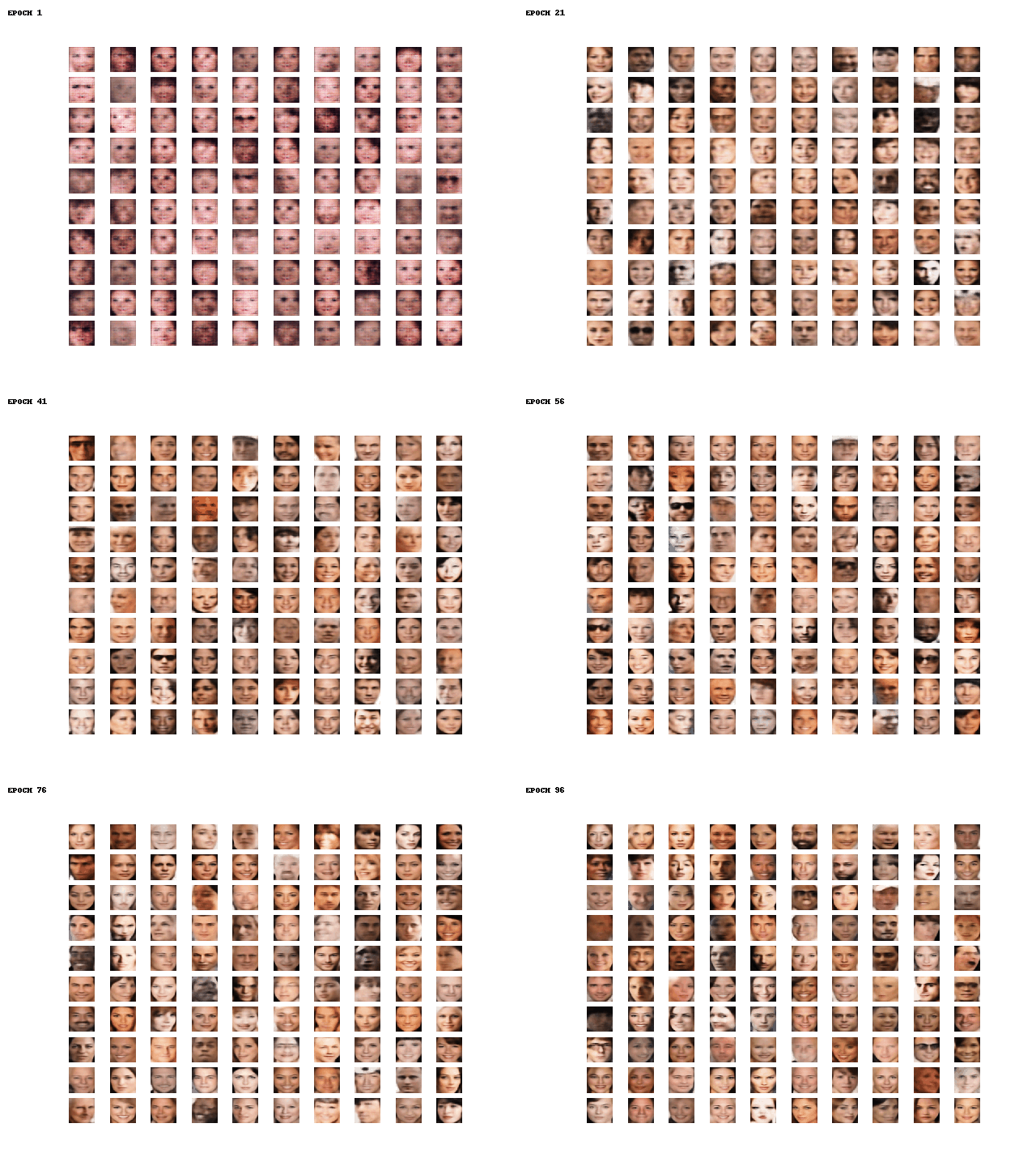
Observations
- Smiles seem to change slightly. This is probably due to the generative characteristics of the model.
- Faces have slight changes that are not necessarily reconstructions.
- Images are still relatively blury, (see metrics section).
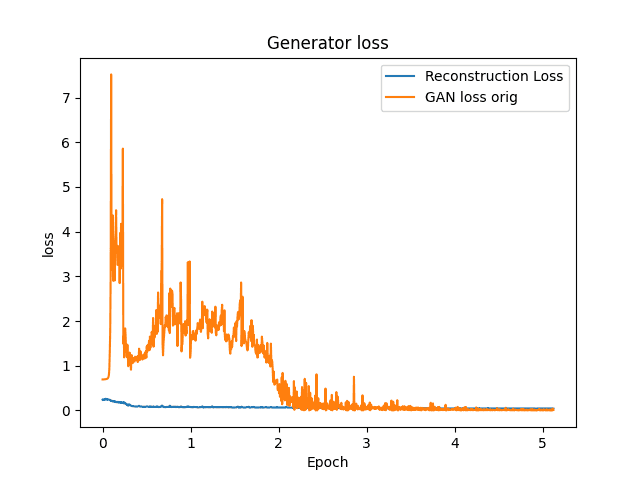
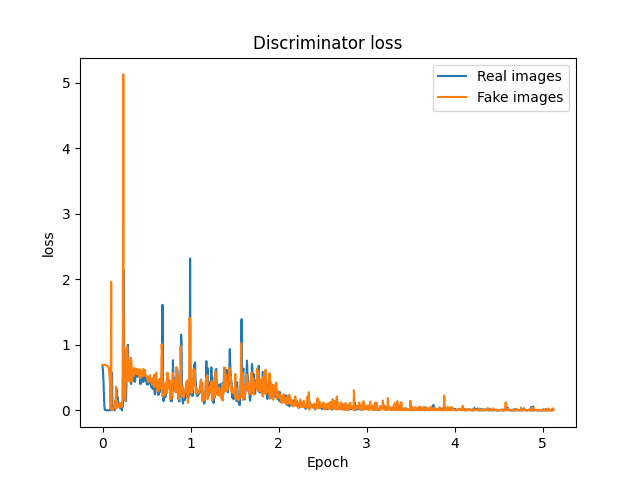
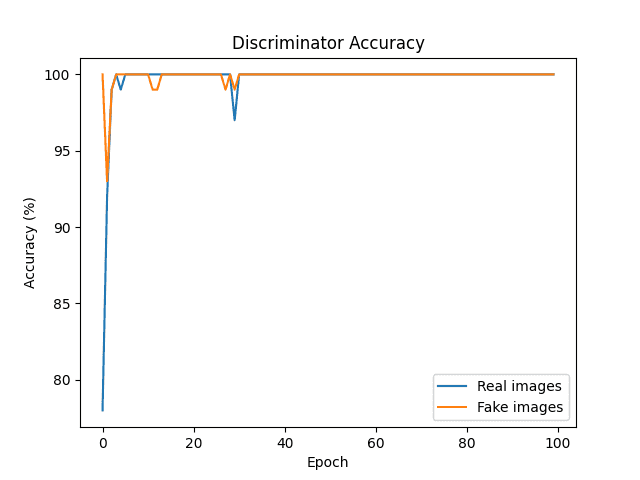
Data
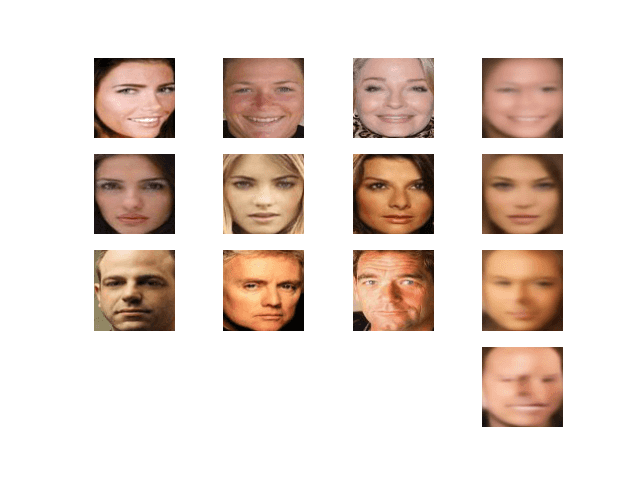
Vector Arithmetic
Top row: smiling women (last column is average latent vector output)
Middle row: neutral women
Bottom row: neutral men
Last image: smiling women - neutral women + neutral man
AE-GAN version 4
Changes from previous model (version 1)
New loss function
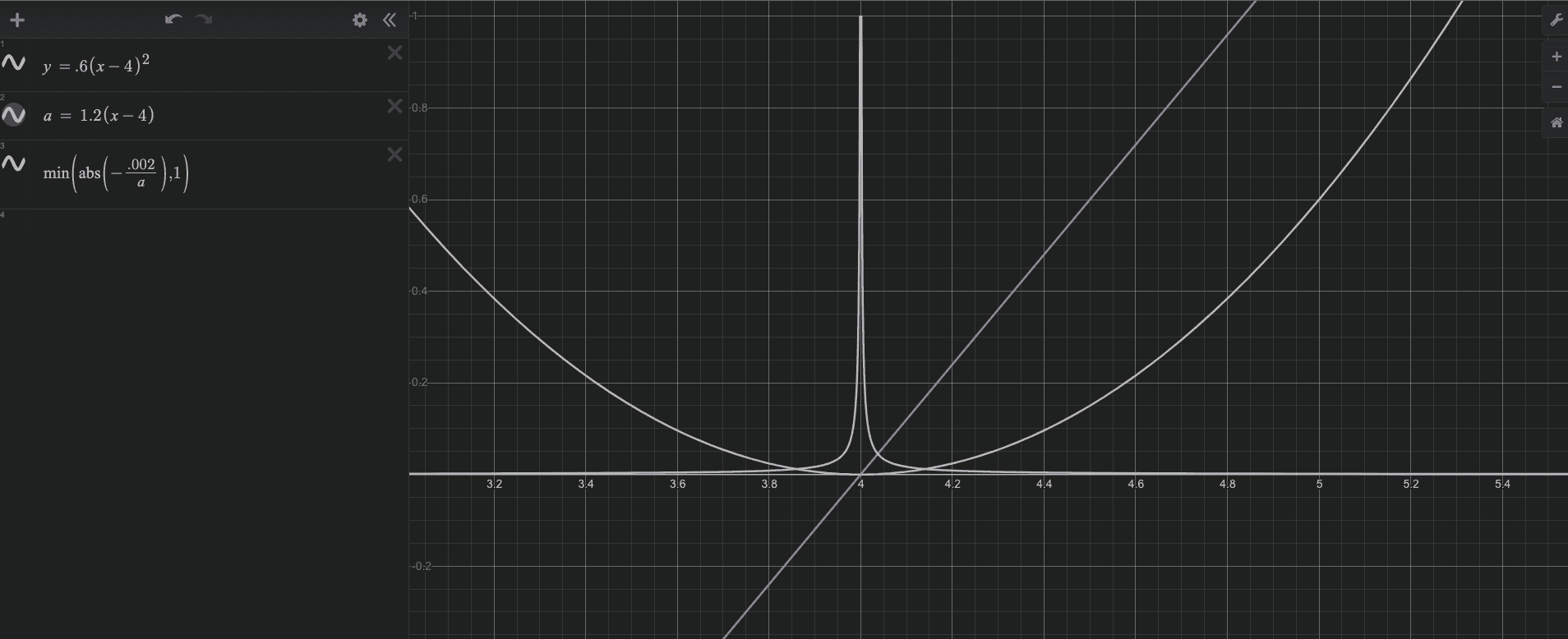
The idea behind this loss function was to make the gan loss beta value increase as the derivative of ae loss approaches 0. As the derivative approaches 0, the idea is that the ae process is nearing completion the closer the derivative gets to 0. Additionally, if the derivative becomes positive, the beta scalar will decrease the same as it increased. The graph below shows a parabolic curve, representing the ae loss value over time. The purple line is the derivative and the spiky line is the negative inverse of the derivative. In practice, ‘a’ (the inverse scalar value) had to be adjusted to tune the steepness of the curve.
def loss_wapper(g_model, alpha):
    mse = MeanSquaredError()
    bce = BinaryCrossentropy()

    def loss(x, y_true, y_pred):
        # run data through generator
        y = g_model(x)
        # calculate typical loss functions
        ae = mse(x, y)
        gan = bce(y_true, y_pred)

        # Read previously stored loss data
        df = pd.read_csv(f"./{MODEL_NAME}/data/alpha_beta_loss_{MODEL_NAME}.csv")
        beta = 0
        # calculate derivative over the last 50 batches
        if len(df.index) > 50:
            derivative = df["ae_loss"].diff(periods=50) / df[
                "ae_loss"
            ].index.to_series().diff(periods=50)
            # calculate scaled negative inverse
            beta_vec = abs(-0.0000002 / derivative)
            # limit max beta to 1
            beta_vec = beta_vec.apply(lambda x: min(x, 1)).fillna(0)
            beta = beta_vec.iloc[-1]

        gan_loss_scaled = tf.math.scalar_mul(beta, gan)
        # record results for analysis
        with open(f"./{MODEL_NAME}/data/alpha_beta_loss_{MODEL_NAME}.csv", "a") as f:
            f.write(f"{ae},{gan},{beta}\n")

        return ae + gan_loss_scaled

    return loss
Results

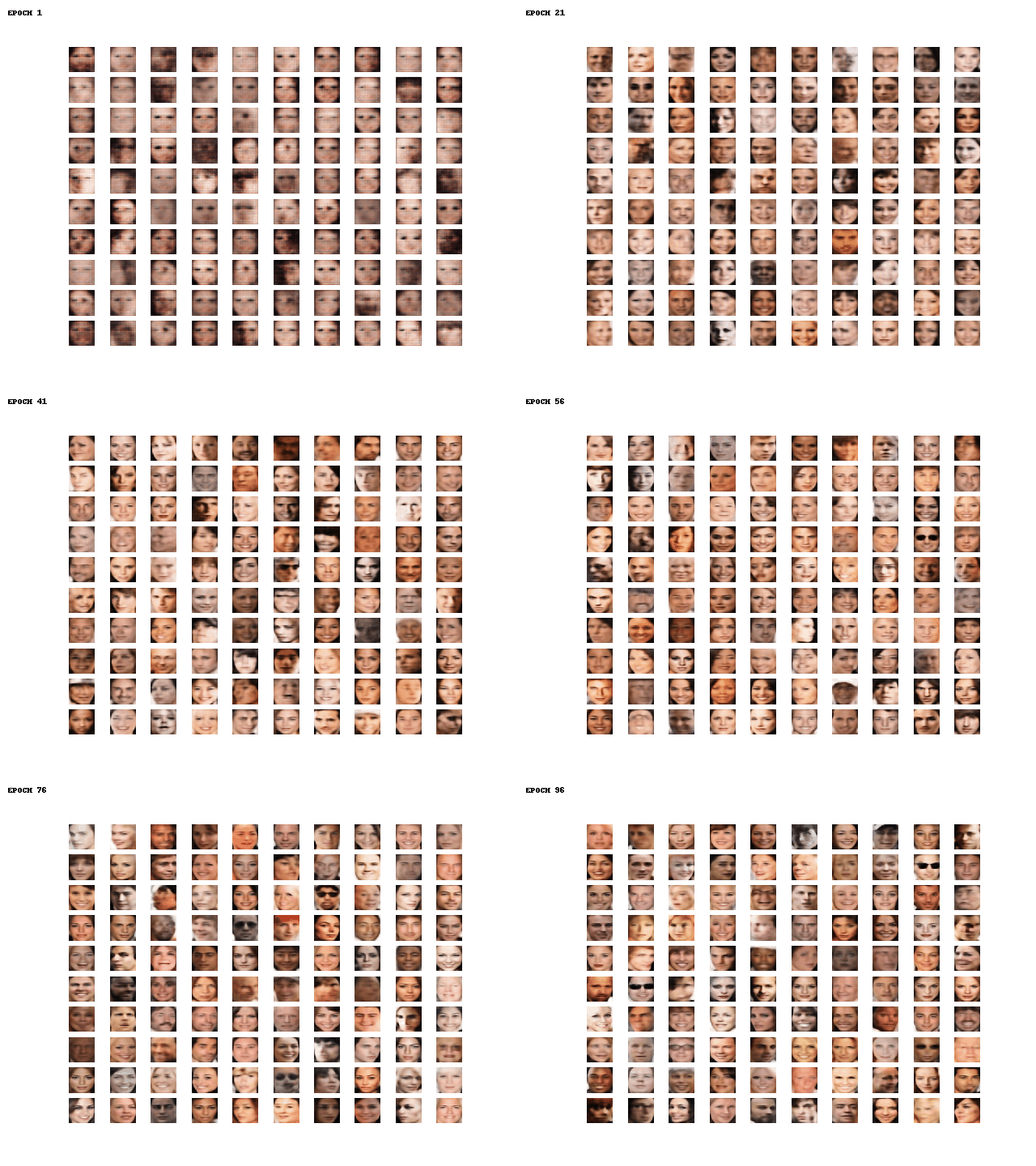
Observations
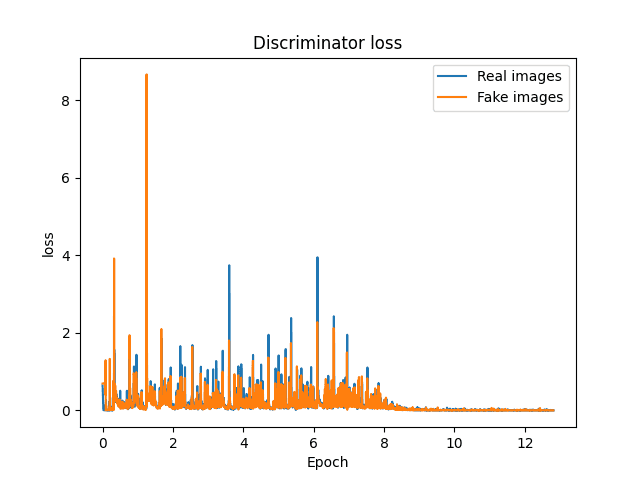
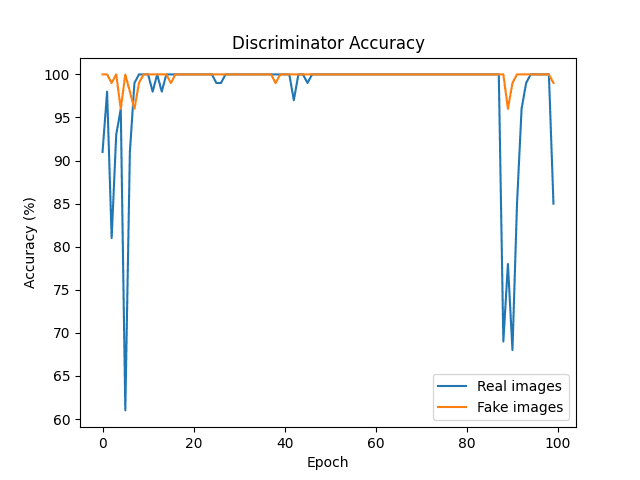
- Eyes are much more prominent on these images. I think that is due to the GAN loss being more active in this model.
- Images are still pretty blury.
Data
Vector Arithmetic
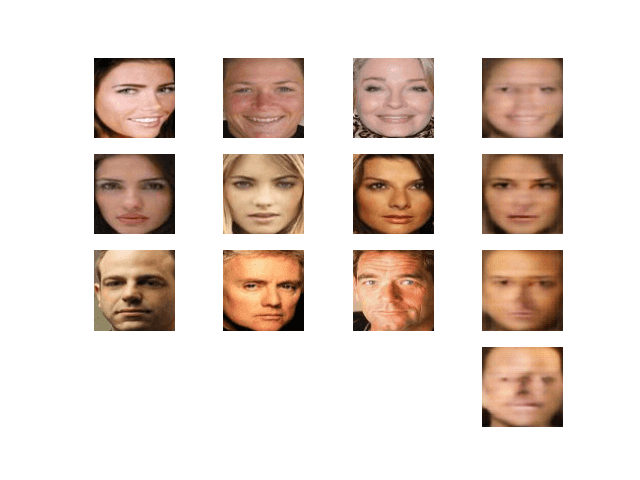
Top row: smiling women (last column is average latent vector output)
Middle row: neutral women
Bottom row: neutral men
Last image: smiling women - neutral women + neutral man
AE-GAN version 5
Changes from previous model (version 4)
New loss function
def loss_wapper(g_model, alpha):
    mse = MeanSquaredError()
    bce = BinaryCrossentropy()

    def loss(x, y_true, y_pred):
        # run data through generator
        y = g_model(x)
        # calculate typical loss functions
        ae = mse(x, y)
        gan = bce(y_true, y_pred)

        gan_ceil = min(ae, gan)

        # record results for analysis
        with open(f"./{MODEL_NAME}/data/alpha_beta_loss_{MODEL_NAME}.csv", "a") as f:
            f.write(f"{ae},{gan}\n")

        return ae + gan_ceil

    return loss
Results

Observations
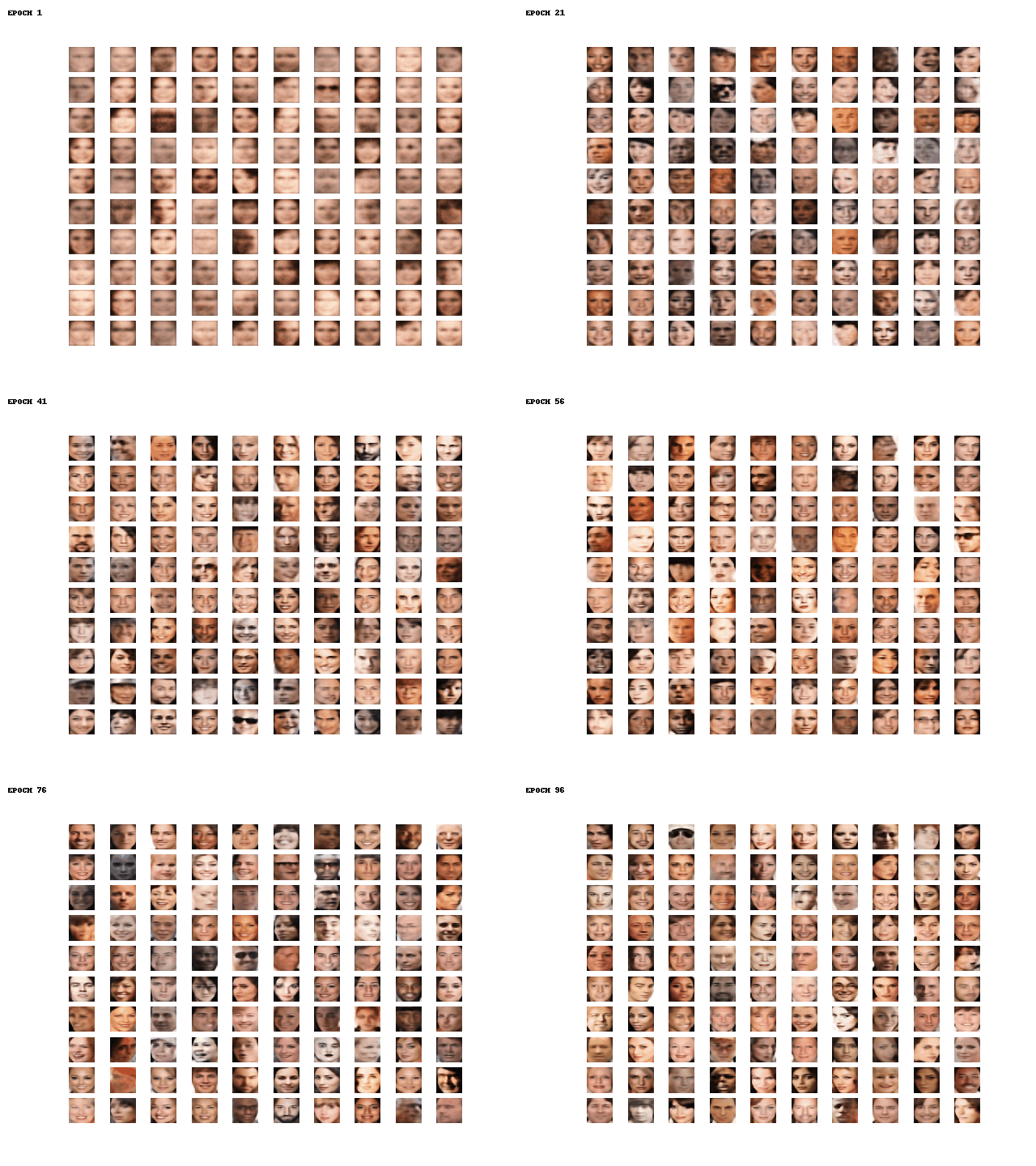
- Results are almost identical to the baseline model.
Data
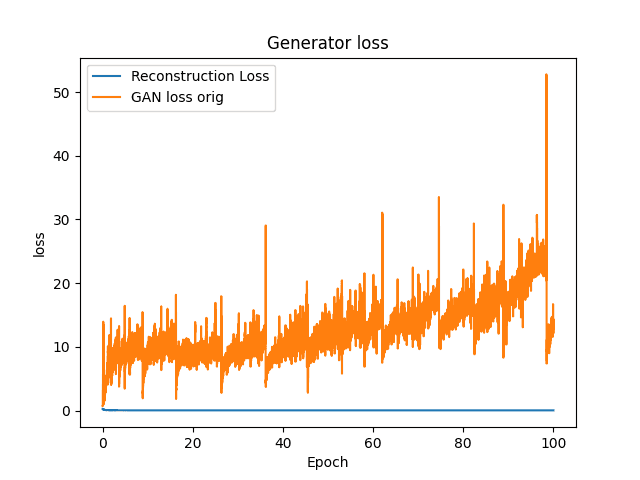
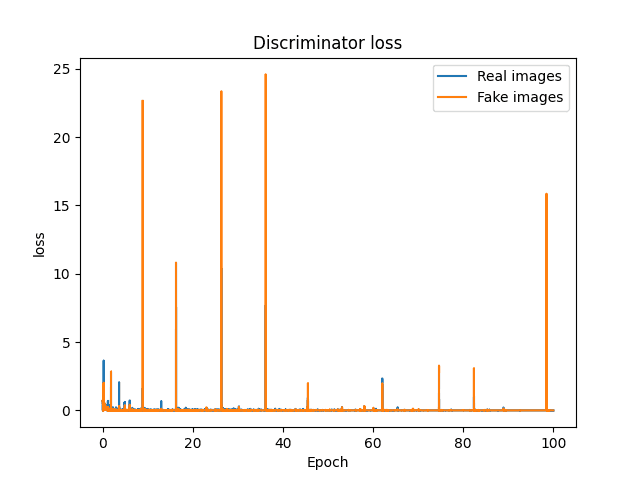
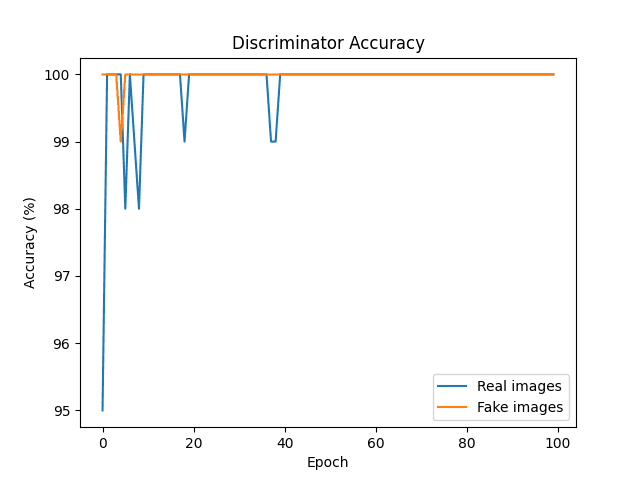
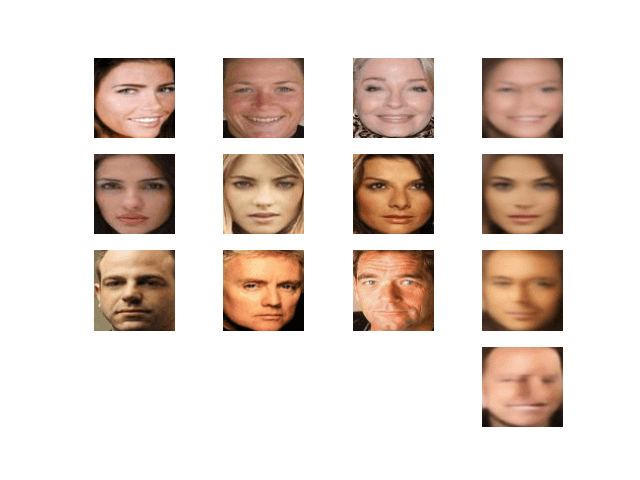
Vector Arithmetic
Top row: smiling women (last column is average latent vector output)
Middle row: neutral women
Bottom row: neutral men
Last image: smiling women - neutral women + neutral man
Metrics
| Metric | Baseline | AE-GAN version 1 | AE-GAN version 4 | AE-GAN version 5 |
|---|---|---|---|---|
| Blur factor (dataset raw = 658.269) | 112.923 | 102.538 | 232.115 | 114.730 |
| Discriminator loss real | 1.0542e-12 | 4.697e-10 | 2.069e-8 | 1.316e-12 |
| Discriminator loss fake | 1.308e-9 | 0.0 | 0.0 | 1.959e-10 |
| Discriminator accuracy real | 100% | 99.650% | 97.800% | 99.870% |
| Discriminator accuracy fake | 99.950% | 99.880% | 99.800% | 99.990% |
| Generator loss | 0.694 | 0.017 | 0.017 | 0.707 |
| Complexity (trainable/non-trainable) | 3,222,587 / 1,651,841 | 3,222,587 / 1,651,841 | 3,222,587 / 1,651,841 | 3,222,587 / 1,651,841 |
| Latent space nodes | 100 | 100 | 100 | 100 |