Building an accordion AE to retry experiment from last week
Accordion V1
Model: "model"
_________________________________________________________________
Layer (type)                 Output Shape              Param #
=================================================================
input_1 (InputLayer)         [(None, 128, 128, 3)]     0
_________________________________________________________________
conv2d (Conv2D)              (None, 64, 64, 128)       3584
_________________________________________________________________
conv2d_1 (Conv2D)            (None, 32, 32, 128)       147584
_________________________________________________________________
conv2d_2 (Conv2D)            (None, 16, 16, 256)       295168
_________________________________________________________________
batch_normalization (BatchNo (None, 16, 16, 256)       1024
_________________________________________________________________
conv2d_transpose (Conv2DTran (None, 32, 32, 128)       295040
_________________________________________________________________
conv2d_transpose_1 (Conv2DTr (None, 64, 64, 64)        73792
_________________________________________________________________
conv2d_transpose_2 (Conv2DTr (None, 128, 128, 3)       1731
_________________________________________________________________
conv2d_3 (Conv2D)            (None, 64, 64, 128)       3584
_________________________________________________________________
conv2d_4 (Conv2D)            (None, 32, 32, 128)       147584
_________________________________________________________________
conv2d_5 (Conv2D)            (None, 16, 16, 256)       295168
_________________________________________________________________
batch_normalization_1 (Batch (None, 16, 16, 256)       1024
_________________________________________________________________
conv2d_transpose_3 (Conv2DTr (None, 32, 32, 128)       295040
_________________________________________________________________
conv2d_transpose_4 (Conv2DTr (None, 64, 64, 64)        73792
_________________________________________________________________
conv2d_transpose_5 (Conv2DTr (None, 128, 128, 3)       1731
=================================================================
Total params: 1,635,846
Trainable params: 1,634,822
Non-trainable params: 1,024
_________________________________________________________________
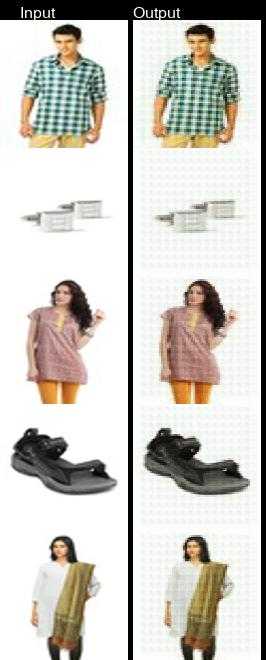
- Blocking effect seems to be happening.
- After testing new architecture, it does not seem to help much with reducing blury output.
Using CelebA dataset for vector arithmetic
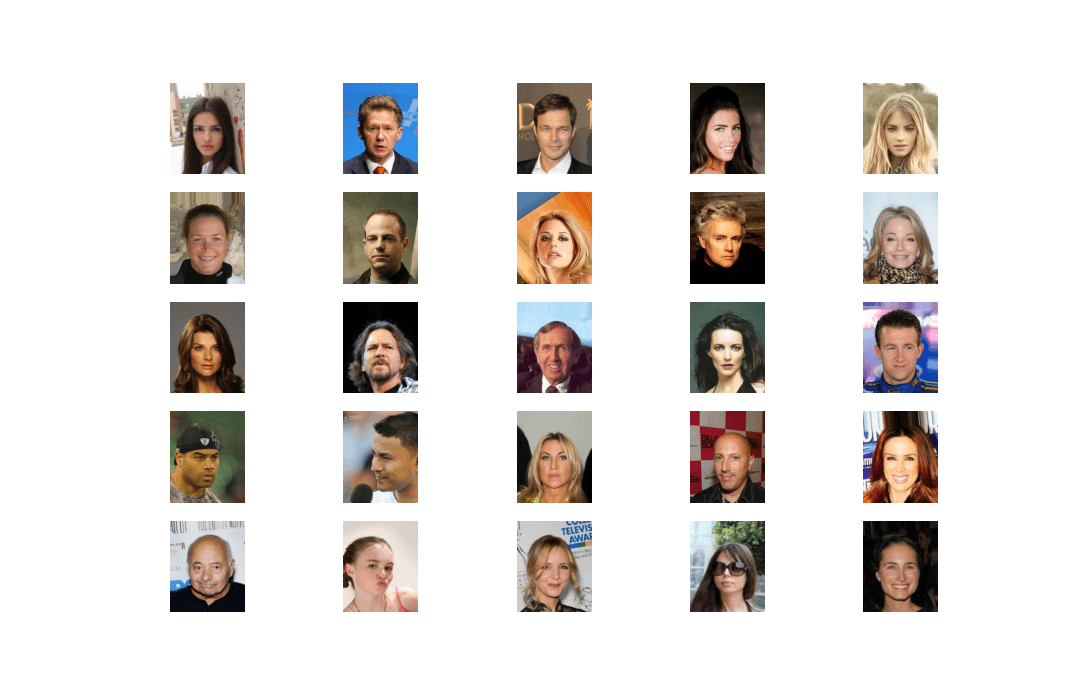
Dataset sample
Preprocessing
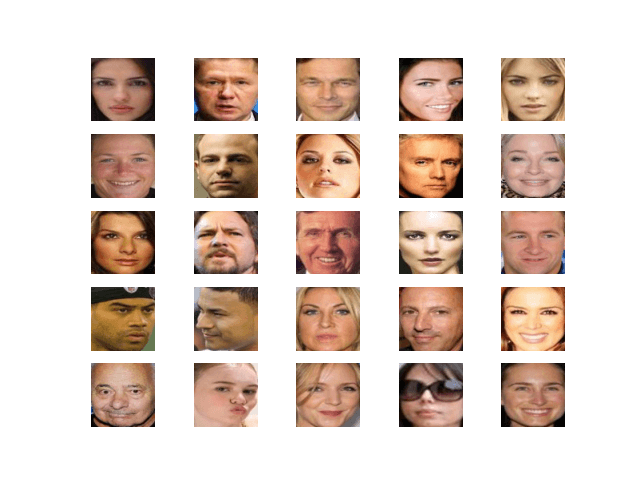
To increase model performance, only the faces in each image were extracted using a pre-trained Multi-Task Cascaded Convolutional Neural Network (MTCNN).
Below are the same faces as above, but only the face extracted.
VAE Model for vector arithmetic
Note: The model from the article is a GAN, I chose to use a VAE to keep our experiments more consistent with the ‘autoencoder’ structure.
VAE Version 1
Encoder
Model: "model"
__________________________________________________________________________________________________
Layer (type)                    Output Shape         Param #     Connected to
==================================================================================================
input_1 (InputLayer)            [(None, 80, 80, 3)]  0
__________________________________________________________________________________________________
conv2d (Conv2D)                 (None, 40, 40, 128)  3584        input_1[0][0]
__________________________________________________________________________________________________
conv2d_1 (Conv2D)               (None, 20, 20, 64)   73792       conv2d[0][0]
__________________________________________________________________________________________________
conv2d_2 (Conv2D)               (None, 10, 10, 32)   18464       conv2d_1[0][0]
__________________________________________________________________________________________________
conv2d_3 (Conv2D)               (None, 5, 5, 16)     4624        conv2d_2[0][0]
__________________________________________________________________________________________________
batch_normalization (BatchNorma (None, 5, 5, 16)     64          conv2d_3[0][0]
__________________________________________________________________________________________________
flatten (Flatten)               (None, 400)          0           batch_normalization[0][0]
__________________________________________________________________________________________________
dense (Dense)                   (None, 256)          102656      flatten[0][0]
__________________________________________________________________________________________________
dense_1 (Dense)                 (None, 256)          102656      flatten[0][0]
__________________________________________________________________________________________________
lambda (Lambda)                 (None, 256)          0           dense[0][0]
                                                                 dense_1[0][0]
==================================================================================================
Total params: 305,840
Trainable params: 305,808
Non-trainable params: 32
Decoder
Model: "model_1"
_________________________________________________________________
Layer (type)                 Output Shape              Param #
=================================================================
input_2 (InputLayer)         [(None, 256)]             0
_________________________________________________________________
intermediate_decoder (Dense) (None, 400)               102800
_________________________________________________________________
reshape (Reshape)            (None, 5, 5, 16)          0
_________________________________________________________________
conv2d_transpose (Conv2DTran (None, 10, 10, 32)        4640
_________________________________________________________________
conv2d_transpose_1 (Conv2DTr (None, 20, 20, 64)        18496
_________________________________________________________________
conv2d_transpose_2 (Conv2DTr (None, 40, 40, 128)       73856
_________________________________________________________________
conv2d_transpose_3 (Conv2DTr (None, 80, 80, 3)         3459
=================================================================
Total params: 203,251
Trainable params: 203,251
Non-trainable params: 0
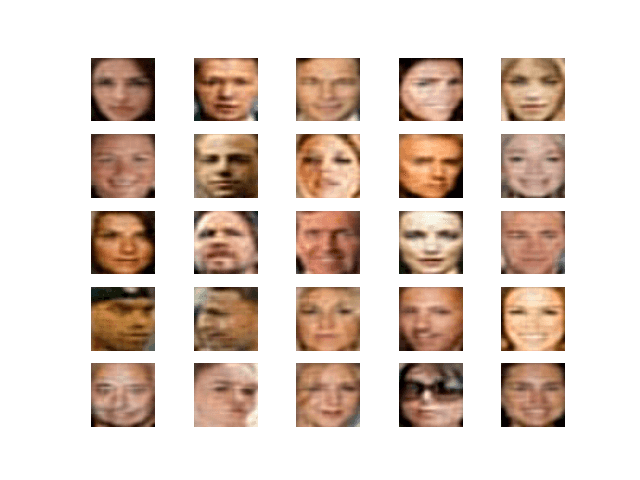
VAE Reconstruction results
The result here is better than I expected for a VAE of this size, output was expected to be blurry, but one can make out who the face is. It might be worth using a GAN for future experiments as that’s what was used in the article.
Vector Arithmetic process
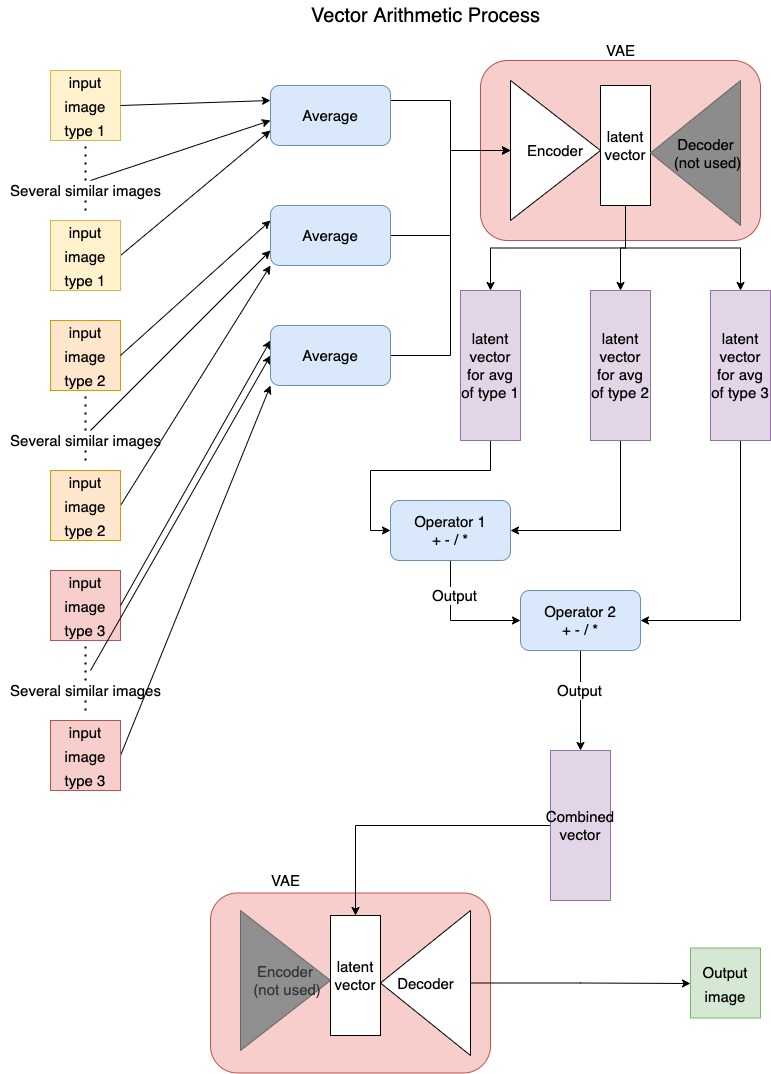
For my vector arithmetic equation, I chose to use the same equation as the article.
smiling woman - neutral woman + neutral man = smiling man
VAE Vector Arithmetic Results
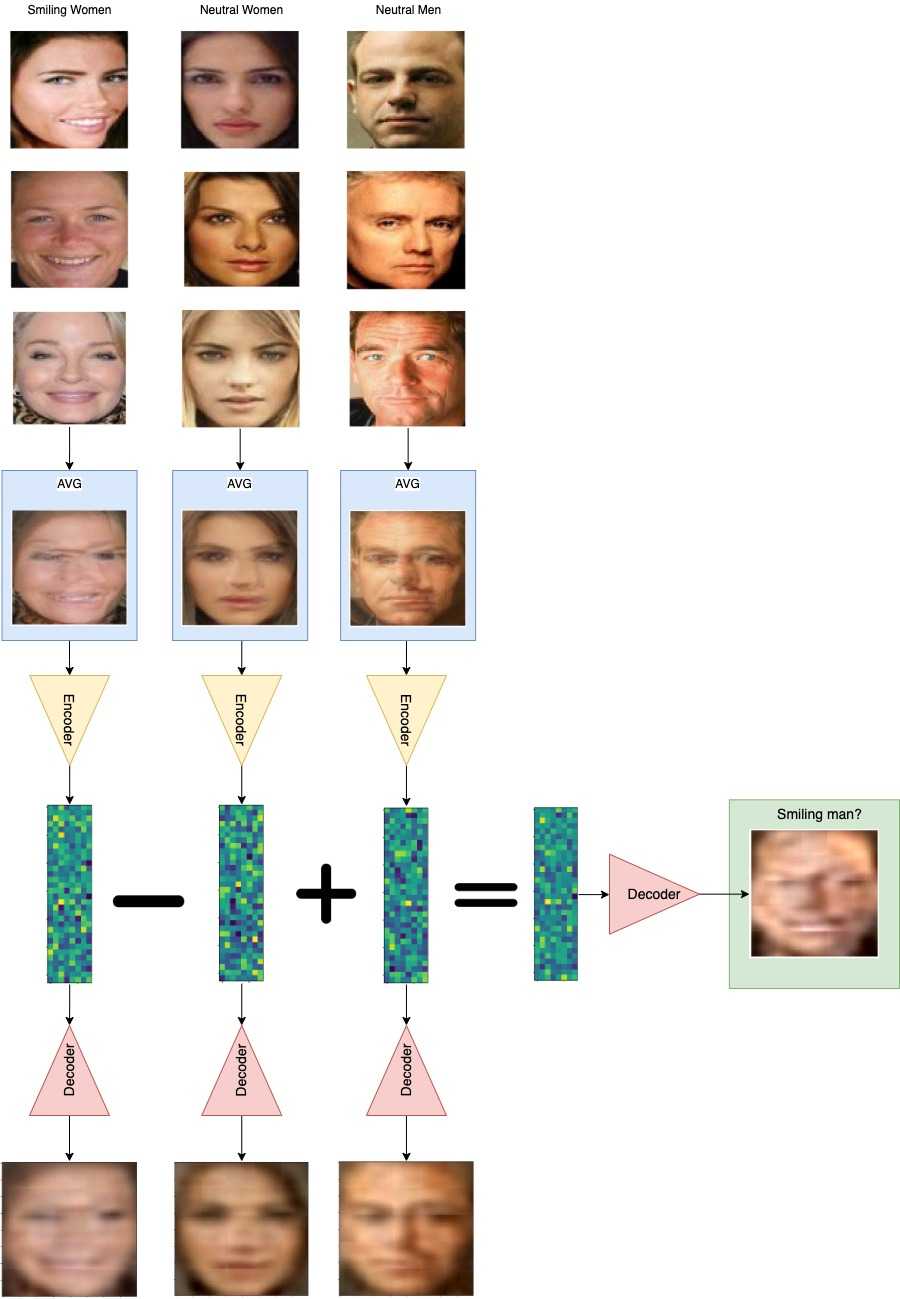
- Blurriness seems to get propagated, but images seem to make more sense.
- I think taking the average of the images is causing problems.
- Perhaps we need more than just 3 images to average?
- Perhaps a GAN would work better?
Latent space distributions
I wanted to get a better visualization of the latent space for each average image, so I made a histogram of each latent vector.
Notice they all ‘seem’ to be a normal distribution.
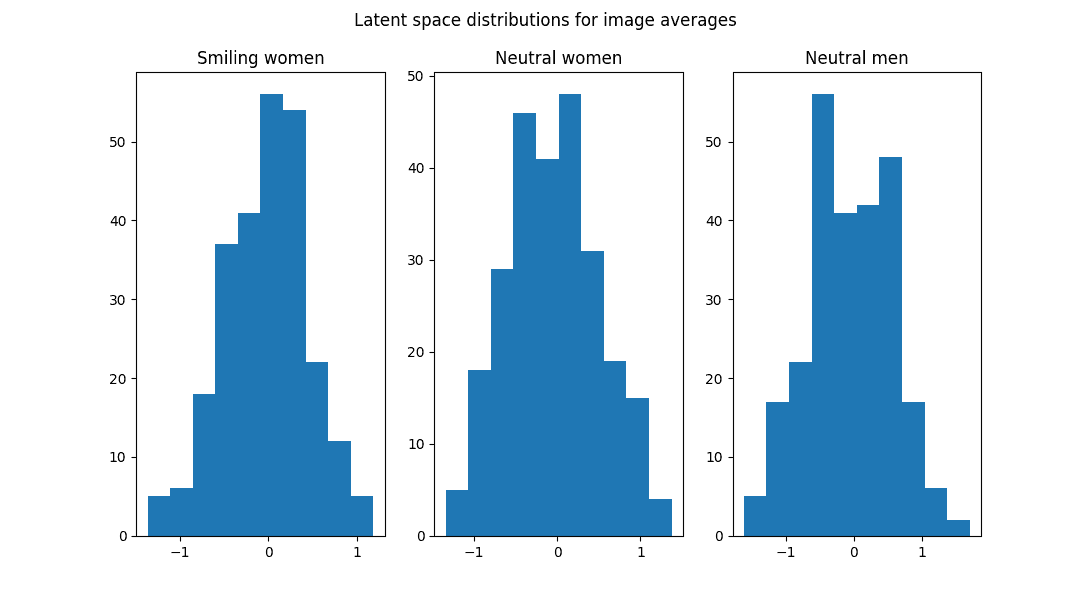
I also noticed the distribution of the first few values of the latent vector and possibly all the values of the latent vector to follow a normal-ish distribution when comparing each corresponding value in 90 different predictions.

- Note the distributions are ‘normal-ish’ but don’t always have a mean of 0.
Conclusion
- I’d like to retry this experiment with a GAN to see if performance is better.